
Diesel price on Monday was hiked by 25 paise per litre -- the third increase since last week -- and more rate hikes for both diesel and petrol are in the offing in the coming days as international oil prices have soared to a three-year high. The price of diesel was hiked to Rs 89.32 per litre in Delhi and to Rs 96.94 in Mumbai, according to a price notification of state-owned fuel retailers. This is the second straight day of increase in diesel prices and the third since September 24 when the state-owned oil firms ended a three-week hiatus in rates.

Diesel in Mumbai costs Rs 79.72 per litre at IOC outlets and Rs 79.79 at BPCL outlets.
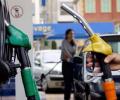
This is the second straight increase in ATF price this month. Rates were hiked by a record 56.5 per cent (Rs 12,126.75 per kl) on June 1. Simultaneously, petrol and diesel prices were hiked for the 10th day in a row.

Govt's move will facilitate entry of global giants such as Total SA of France, Saudi Arabia's Aramco, BP Plc of the UK, and Trafigura's downstream arm Puma Energy.

A pilot for daily revision of petrol and diesel price will be first implemented in Puducherry and Vizag in Andhra Pradesh, Udaipur in Rajasthan, Jamshedpur in Jharkhand and Chandigarh

The Vedanta group on Wednesday confirmed putting in a preliminary expression of interest (EoI) for buying the government's stake in Bharat Petroleum Corp Ltd (BPCL).

According to sources, Russian energy giant Rosneft or its affiliates, Saudi Aramco and Reliance Industries are in race for BPCL's three refineries - Mumbai, Kochi in Kerala and Bina in Madhya Pradesh - 16,309 petrol pumps, 6,113 LPG distributor agencies and more than a fifth of 256 aviation fuel stations in the country.

Fernandes wanted Coca-Cola Company to not just transfer 60 per cent of the shares of its Indian firm but also the formula for its concentrate to Indian shareholders.

Following up on Finance Minister Arun Jaitley's Budget announcement of creating an integrated oil company, India's biggest oil and gas producer ONGC may buy all of the government's 51.11 per cent stake in Hindustan Petroleum Corporation Ltd.
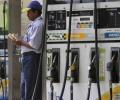
India's fuel consumption slumped by over 66 per cent in the first week of April as a nationwide lockdown halted economic activity and travel, which eviscerated demand. Petrol and diesel demand is down 66 per cent in April, while aviation turbine fuel (ATF) consumption has collapsed by 90 per cent as most airlines have stopped flying, industry officials said.
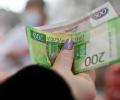
As much as 8 billion rubles (about Rs 1,000 crore) of dividend income belonging to Indian oil firms is stuck in Russia after the Putin administration clamped down on dollar repatriation, officials said on Friday. Indian state oil firms have invested $5.46 billion in buying stakes in four different assets in Russia. These include a 49.9 per cent stake in Vankorneft oil and gas field and another 29.9 per cent in TAAS-Yuryakh Neftegazodobycha fields.

Chinese stock markets suffered their biggest single-day drop since the global financial crisis.

IOC along with HPCL and BPCL took a hit of about Rs 4,500 crore from absorbing Re 1 a litre hike.
In 16 days, petrol price has been hiked by Rs 8.3 per litre and diesel by Rs 9.46 - a record increase in rates of the fuel in any fortnight since pricing was deregulated in April 2002.

Cairn India is 25th on the list with 22.2 per cent CGR.
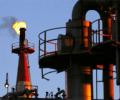
Indian basket at 6-month low of $49.11 a bbl

IOC, BPCL and HPCL on Thursday afternoon stopped ATF supplies to Air India at six airports - Kochi, Pune, Patna, Ranchi, Vizag and Mohali - over payment defaults. AI flights from these places were tanking up from other airports.
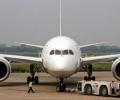
Jet fuel (ATF) price was on Monday hiked by a steep 56.5 per cent and that of non-subsidised cooking gas LPG by Rs 11.5 per cylinder on the back of firming up of international oil rates, but petrol and diesel prices continued to remain on freeze for a record 78th day. Aviation turbine fuel (ATF) price was hiked by Rs 12,126.75 per kilolitre (kl), or 56.5 per cent, to Rs 33,575.37 per kl in the national capital, according to a price notification by State-owned oil marketing companies.

The reduction in auto fuel prices today was the fifth cut in two months on back of softening global oil prices.

Lines up a $1-billion capital expenditure plan for exploration purposes abroad.
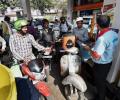
Credit card payments to buy fuel at petrol pumps will from October 1 not get a 0.75 per cent discount that State-owned oil companies had introduced more than two-and-a-half years back to promote digital payments.

Oil companies on Monday slashed petrol price by Rs 3.02 per litre.
Fuel rates were last revised on February 1 when petrol price was cut by a marginal 4 paise a litre.
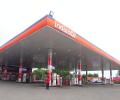
This is the first time that petrol sales in the world's third-largest oil importer have risen since the March 25 nationwide lockdown crippled economic activity and sent demand plummeting.

ONGC Videsh Ltd and Oil India Ltd will buy Videocon Industries' 10 per cent stake in a giant Mozambique gas field for $2.475 billion.

"Financial bids for Air India disinvestment received by Transaction Adviser. Process now moves to concluding stage," DIPAM Secretary Tuhin Kanta Pandey tweeted.
Oil prices have declined by more than 60 per cent since January with benchmark crude falling well below $30 per barrel, driven by an acute oil demand decline caused by the coronavirus and a lack of production cuts by OPEC and other oil producing countries.
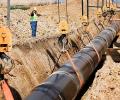
While previously selling of the marketing business, possibly to another state-owned firm, was being considered, the government is now mulling on hiving off the pipelines into a separate entity and selling off a majority stake in it.
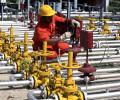
The government has ordered Oil and Natural Gas Corp (ONGC) to pay a near-record Rs 13,764 crore as fuel subsidy for the December quarter, a move that will dent the firm's profitability.
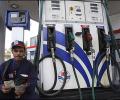
A litre of diesel will cost Rs 48.01 compared to Rs 49.31 at present

Indian Oil Corp is unlikely to bid for a share in six new pipelines being built by Reliance Industries to transport fuel from its refinery to its planned chain of petrol stations.\n\n\n\n

Changing tracks helps. But, not taking the beaten path isn't always helpful. This is the story of two of India's biggest privatisations - Air India and Bharat Petroleum (BPCL). Nearly two decades after the last privatisation, a landmark divestment concluded this year when the loss-making national carrier Air India was sold to the Tatas.

Nifty50 surged 87 points to end at 8,157, highest closing levels since Oct 29, 2015.
The Union government will gain close to Rs 1.6 lakh crore in additional revenues this fiscal from a record hike in excise duty on petrol and diesel that has pushed the total incidence of taxation on auto fuels to 70 per cent of the price. Late on Tuesday evening, the government hiked excise duty on petrol by Rs 10 per litre and that on diesel by Rs 13 a litre to mop up gains arising from international oil prices falling to a two-decade low.

Struggling to meet budget targets, the government had in the just concluded fiscal asked cash-rich PSUs to pay second interim dividend as well as undertake share buyback.

The target of mopping up Rs 1.75 lakh crore from divestments of some of the public sector companies, including LIC and BPCL during the current fiscal, is on track and groundwork is being prepared for the goal, Chief Economic Advisor Krishnamurthy Subramanian said on Monday. On the COVID-19 pandemic, Subramanian said the impact of the second wave is lesser than that of the first one. In an interactive session, organised by Federation of Telangana Chambers of Commerce and Industry, the CEA said robust GST collections, over Rs one lakh crore per month for eight months in a row shows that consumption is picking up indicating positive signal for growth.

India on Tuesday pitched for a stake in vast oil and gas fields as well as LNG terminals in the frozen Artic of Far East Russia as it looked to import more oil from the former Soviet republic as part of a strategy to diversify its energy basket.

Referring to Modi, Adityanath and Union Home Minister Amit Shah as 'outsiders', the farmer leader said he has no objection if they become prime ministers after winning polls from Uttarakhand or Gujarat.

The government has merged the Department of Public Enterprises (DPE) with the finance ministry to give it a better control over state-owned firms and facilitate its ambitious privatisation programme. Finance ministry will now have six departments while DPE's hereto parent ministry, the ministry of heavy industries and public enterprises will now be called the ministry of heavy industries. Previously, the disinvestment ministry - created under the Atal Bihari Vajpayee government - was merged with the finance ministry and is now a department under it. Also, Foreign Investment Promotion Board (FIPB) was abolished and administration of foreign investments was given to the finance ministry (FinMin).
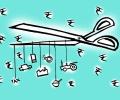
Processes are at an advanced stage for a number of assets of the Centre and central public sector enterprises (CPSEs) to be monetised. The assets include office space, apartments, factories, land, power transmission assets, sports stadia, gas pipelines, and telecom assets.
 © 2026 Rediff.com - Advertise with us - Disclaimer - Privacy Policy - Sitemap - Feedback - About us - Terms of use - Grievances